

In Star Trek from the Original Series episode “The City on the Edge of Forever,” the Guardian of Forever stands in the ruins of a lost great civilization. It is a vast living portal whose only purpose is to watch and record history as it unfolded. It speaks in riddles and truths: “I am both and neither. I am my own beginning, my own ending.” When I think about that image, I think about us museum educators standing guard at our own gateways between past and present.
Now those gateways are under siege. This year is an unprecedented one. We are living in a moment where stories, histories, truth, free speech, and identity are all under fire. Across the United States and parts of Europe, museum educators and cultural workers are facing attacks on how stories are told with concentrated efforts made to silence and sanitise difficult histories, erase marginalised voices and experiences, and to limit whose humanity is considered valid. Rather than debates about interpretation, these are conscious efforts to reshape public memory, limit the freedom to learn, and serve as direct threats to our work, our institutions, the communities we serve, and in some cases our very lives.
History has shown us time and time again not only what is at stake but also warns us what can happen when knowledge is suppressed or lost. We have no idea how much knowledge was lost when the Library of Alexandria was disappeared into a world of intolerance and ignorance.
Indeed, the historical significance of museums as custodians of collective memory cannot be overstated. One of the first guardians of the world’s past in ancient Egypt was the royal scribe and chief lector priest Padiamenope who lived during Egypt’s 25th-26th dynasties in the Late Period (c. 710–640 BCE). Through the design of his twenty-two room funerary tomb, Padiamenope preserved more than two millennia of Egyptian architectural and funerary traditions thereby creating the world’s first museum. His museum-tomb included models, statues, and full-scale reproductions of mummification practices, burial architecture, sacred texts, and temples dedicated to a multitude of gods and goddesses. Padiamenope even designed the tomb to have both public and private areas, with some sections being open to the general public, some sections closed off to the living completely, and some sections only accessible to other followers of the cult of the war god Montu. He greeted visitors with the following inscription:
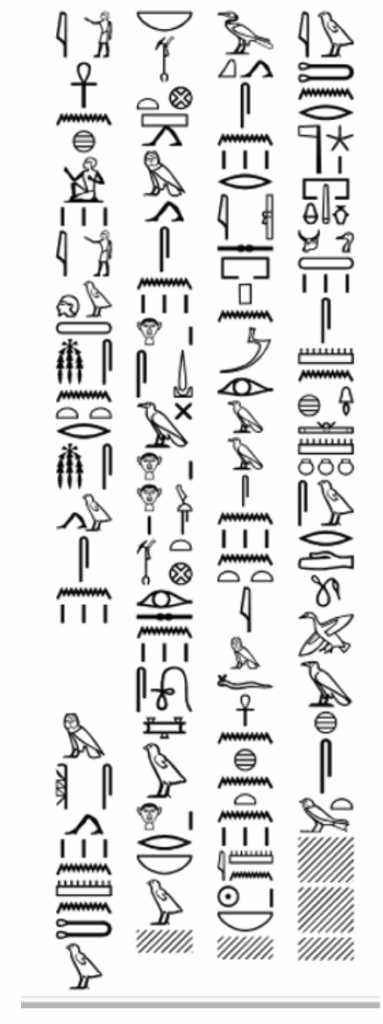
Oh living ones,
Oh those who are upon earth,
Those who were born and those who will be born,
Those who come as followers of Montu, Lord of Thebes,
Those who walk through the necropolis in order to entertain oneself,
Those who seek all kind of formula [knowledge],
May they enter to this tomb,
In order that they may see what is in it,
Amen-Re, Lord of the Thrones of the Two Land[s] is living for you,
If you adore the god, recite the offering formula in order to make this monument
complete,
May you grow that which decays.
Padiamenope created his tomb during a time of foreign rule and political instability in Egypt. He understood that the knowledge he held needed protection and that Egypt’s story might one day depend on it. In that act, Padiamenope became a revolutionary.
As we face our own moment of instability, we too must act as Guardians of Forever.
In 2025-2026, we at the Museum Education Roundtable, and the Journal for Museum Education will continue to platform stories and voices that matter. We will also be continuing with crafting our strategic plan as we look towards sustaining a more inclusive future.
I invite you this year to engage with the Museum Education Roundtable and the Journal for Museum Education not only as a professional resource, but also as a collective platform for advocacy. Our journal, board, and community are here as a forum for ideas, strategy, and courage. Please contact us at: [email protected] to activate any of these resources. Other ways you can stay involved include:
Becoming a member of MER to access the JME and other benefits such as our job board and member news
- Gifting a membership to support current and future professionals
- Contributing as a writer, guest editor, or peer reviewer of the JME and the Museum Visions Blog
- Applying to serve on our Board of Directors or to work as contracted staff
- Engaging in conversation on our Instagram, LinkedIn, BlueSky, and Facebook platforms
- Subscribing to the MER Newsletter
Community now is more important than ever. I am therefore deeply indebted and grateful to weather the year ahead with the rest of the Board of Directors and our contracted staff.
Museum educators serve as our own Guardians by continuing to hold the doorway open and ensuring that truth is not lost to the distortions of the present. We cannot control what others do with the past, but we can continue to keep the gateway open. This is the time to protect and advocate for the stories and voices that matter. Let us not be the generation that allows them to disappear but instead fights for a future where every story and voice has the opportunity to be heard.
In solidarity,
Dr. Alexandra F. Morris
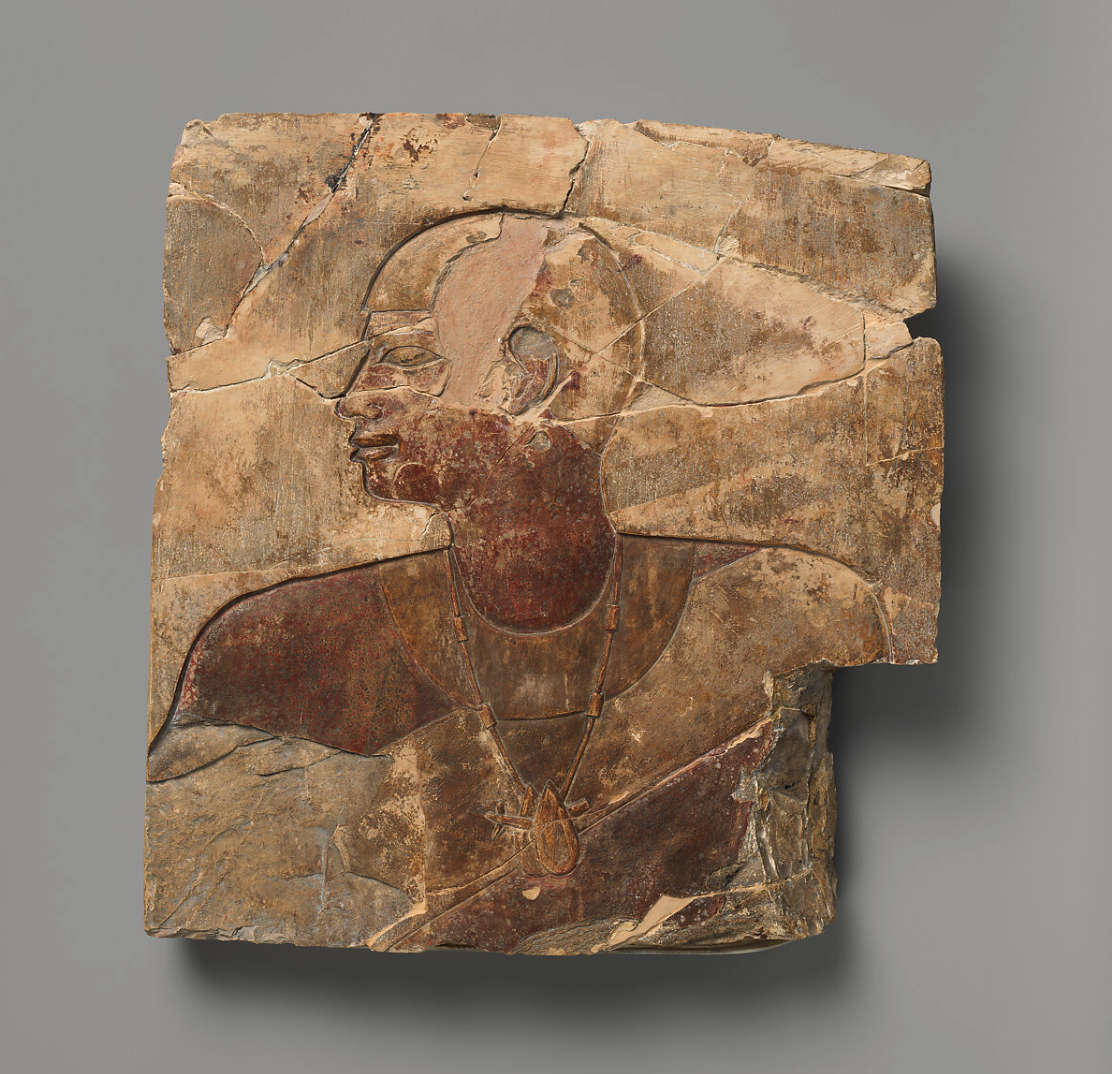
Relief attributed to Petamenophis. Late Period, Kushite-early Saite. Dynasty 25–early Dynasty 26, ca. 710–640 B.C. From Egypt, Upper Egypt, Thebes, Asasif, Tomb of Petamenophis (TT 33) probably. Limestone, paint. Dimensions: H. 41 × W. 38.5 × D. 6.5 cm, 14.8 kg. Credit Line: Gift of Mr. and Mrs. Douglas Damrosch, in memory of Mrs. John Tee-Van, 1977. Object Number: 1977.217. Metropolitan Museum of Art, New York, New York.